






Choosing the right hosting type is one of the most important decisions when launching or managing a website. Among the most common options available today are shared hosting and cloud hosting. Understanding the difference between these two hosting types helps website owners choose the best solution based on performance, scalability, budget, and reliability.
The debate around shared hosting vs cloud hosting has grown significantly as more businesses move toward cloud-based infrastructure. While shared hosting remains a popular and affordable option for beginners, cloud hosting offers advanced performance and scalability for growing websites.
In this guide, we will explore the complete comparison of shared hosting vs cloud hosting, including how they work, their advantages, limitations, pricing differences, and which option is best for different types of websites.
What Is Shared Hosting?

Shared hosting is one of the most common and beginner-friendly hosting solutions. In this setup, multiple websites are hosted on a single physical server and share the same resources such as CPU, RAM, and storage.
This makes shared hosting an affordable choice because the server cost is divided among many users.
How Shared Hosting Works
When you purchase shared hosting:
- Your website shares server resources with other websites
- The hosting provider manages the server
- Users typically get a control panel like cPanel to manage their website
Shared hosting works well for smaller websites that do not require large amounts of server resources.
Advantages of Shared Hosting
Shared hosting offers several benefits, especially for beginners.
Affordable pricing
Shared hosting plans are usually the cheapest hosting option available.
Easy setup
Most hosting providers offer one-click installations for platforms like WordPress.
Managed environment
Server maintenance and updates are handled by the hosting provider.
Limitations of Shared Hosting
Despite its affordability, shared hosting has some limitations.
Limited resources
Since resources are shared among multiple websites, performance may slow down if another site on the server receives heavy traffic.
Lower scalability
Upgrading server resources is limited compared to cloud hosting.
Security risks
If one website on the server gets compromised, it may affect other websites sharing the same environment.
What Is Cloud Hosting?
Cloud hosting uses multiple connected servers instead of relying on a single server. Your website’s resources are distributed across a network of servers, providing better reliability and performance.
This infrastructure allows websites to scale easily as traffic increases.
How Cloud Hosting Works
In cloud hosting:
- Your website runs on a network of virtual servers
- Resources can be increased instantly
- Data is stored across multiple servers
This setup ensures that even if one server fails, another server can handle the load.
Advantages of Cloud Hosting
Cloud hosting offers several advanced features.
High scalability
Server resources can increase automatically when traffic spikes.
Better reliability
Because multiple servers are involved, downtime is reduced.
Improved performance
Websites often load faster because of distributed infrastructure.
Flexible pricing
Many cloud hosting services use pay-as-you-go pricing.
Limitations of Cloud Hosting
Although powerful, cloud hosting also has a few drawbacks.
Higher cost
Cloud hosting usually costs more than shared hosting.
Complex setup
Some cloud hosting platforms require technical knowledge.
Shared Hosting vs Cloud Hosting: Key Differences
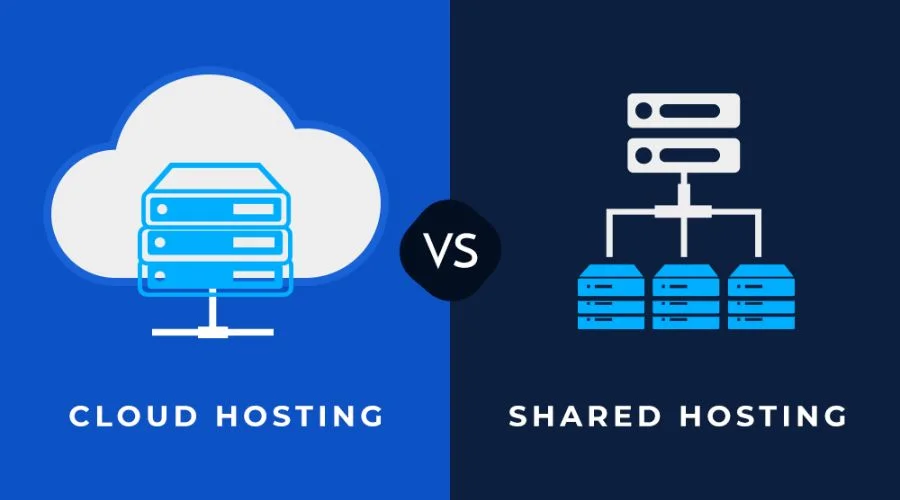
Understanding the differences between shared hosting vs cloud hosting helps determine which option fits your website’s needs.
| Feature | Shared Hosting | Cloud Hosting |
| Server Type | Single physical server | Multiple virtual servers |
| Performance | Moderate | High |
| Scalability | Limited | Highly scalable |
| Reliability | Lower | Very high |
| Security | Basic | Advanced |
| Cost | Low | Medium to high |
This comparison clearly shows that cloud hosting offers stronger performance and scalability.
Performance Comparison
When analyzing shared hosting vs cloud hosting, performance is one of the biggest factors.
Shared hosting can perform well for small websites, but it struggles during traffic spikes. Because all websites share the same resources, heavy usage by one site can affect others.
Cloud hosting, on the other hand, distributes workloads across multiple servers. This makes it much more stable during traffic surges.
Scalability Differences
Scalability is another key factor in the shared hosting vs cloud hosting comparison.
Shared hosting usually requires upgrading to a higher plan or moving to another hosting type when traffic grows.
Cloud hosting allows instant scaling. If your website suddenly receives thousands of visitors, the cloud infrastructure automatically allocates additional resources.
Security Comparison
Security is critical for any website, especially those handling sensitive data.
In the shared hosting vs cloud hosting debate, cloud hosting typically offers stronger security features.
Cloud hosting often includes:
- Advanced firewalls
- Distributed architecture
- Automated monitoring
- Isolated virtual environments
Shared hosting provides basic protection but is more vulnerable due to shared server environments.
Cost Comparison
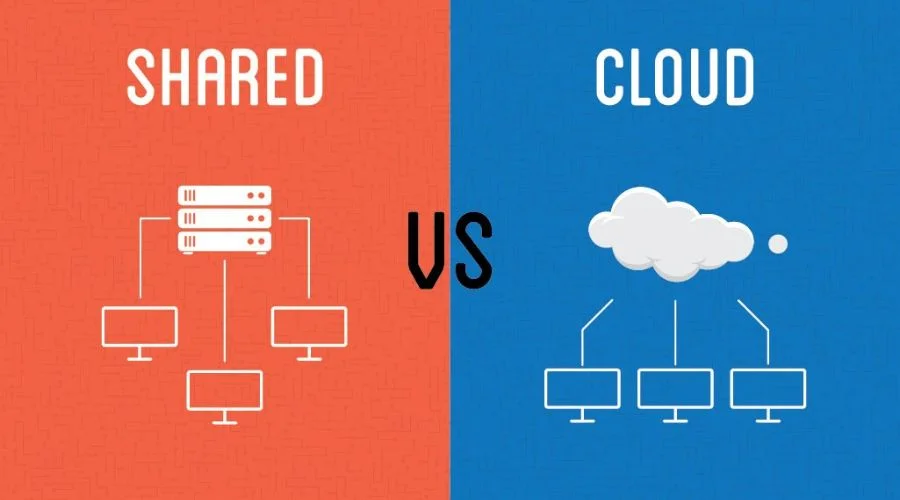
Cost is often the main reason beginners choose shared hosting.
Shared Hosting Pricing
Shared hosting plans typically cost:
- $2 to $10 per month
This makes it ideal for small websites and personal blogs.
Cloud Hosting Pricing
Cloud hosting plans typically range between:
- $10 to $100+ per month depending on resources
Although more expensive, cloud hosting provides significantly better performance and flexibility.
When Should You Choose Shared Hosting?
Shared hosting is a good choice if:
- You are launching your first website
- Your website receives low traffic
- You have a limited budget
- You want a simple hosting setup
Small blogs, portfolio sites, and personal projects usually perform well on shared hosting.
When Should You Choose Cloud Hosting?
- Your website is growing quickly
- You expect traffic spikes
- You run an eCommerce website
- You need high uptime and performance
Businesses, online stores, and high-traffic blogs benefit greatly from cloud hosting infrastructure.
Shared Hosting vs Cloud Hosting for WordPress
WordPress websites can run on both hosting types, but performance differs significantly.
Shared hosting works well for small WordPress blogs or beginner websites.
Cloud hosting is more suitable for:
- WooCommerce stores
- Membership sites
- Large blogs with heavy traffic
- Business websites requiring high performance
This makes cloud hosting the better long-term option for growing WordPress websites.
Conclusion
The choice between shared hosting vs cloud hosting ultimately depends on your website’s needs, budget, and growth expectations.
Shared hosting is a cost-effective solution for beginners and small websites with limited traffic. It offers simple setup and affordable pricing, making it a great starting point for personal blogs and small projects.
Cloud hosting, however, provides superior performance, scalability, and reliability. For growing websites, businesses, and high-traffic platforms, cloud hosting offers the flexibility and infrastructure needed to handle increasing demands.
If your website is just starting out, shared hosting may be enough. But if you expect long-term growth and higher traffic, cloud hosting is often the better investment.